
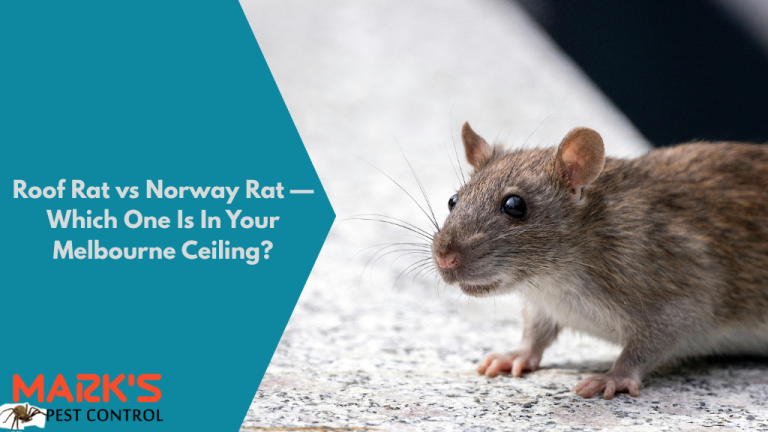
Roof Rat vs Norway Rat — Which One Is In Your Melbourne Ceiling?
Marks Pest Control gets asked a version of this question almost every week: scratching noises overhead but is it a roof rat or a Norway rat in Melbourne roof spaces? The two species look similar at a glance, but they move through a house differently, nest in different spots, and get in through different gaps. […]
Read More
How Rats Enter Melbourne Terrace Homes — Entry Points Explained
Terrace homes across inner Melbourne carry a charm that newer builds simply don't have, but that same period character often comes with hidden gaps that rodents can use to get inside. Marks Pest Control regularly inspects properties where the question isn't whether rats can get in, but which of the many possible rat entry points […]
Read More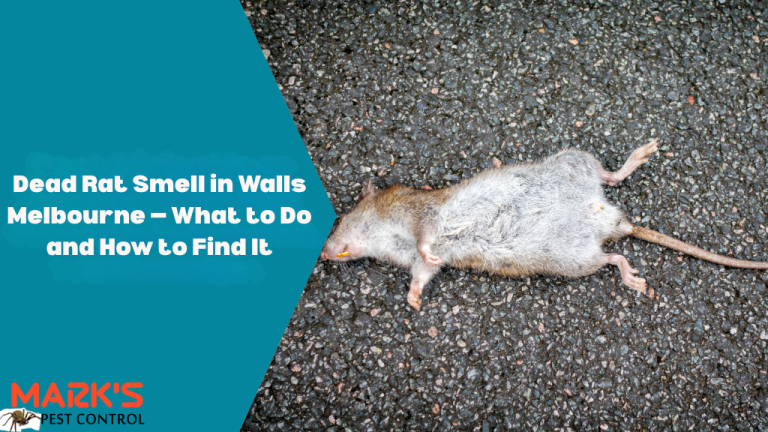
Dead Rat Smell in Walls Melbourne — What to Do and How to Find It
A dead rat smell in walls Melbourne homeowners report is almost always a rodent that has died inside a wall cavity, ceiling void, or subfloor space. It's one of the more distressing pest issues to deal with, because the odour is strong, it lingers, and it's usually coming from somewhere you can't easily reach. Marks […]
Read More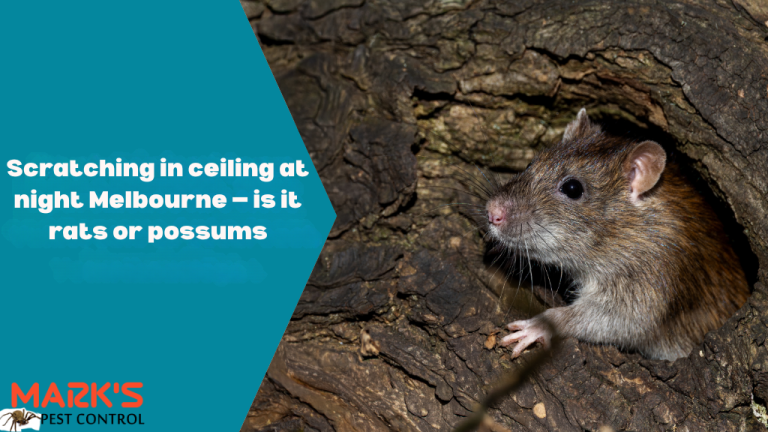
Scratching in ceiling at night Melbourne — is it rats or possums
Scratching in ceiling at night Melbourne homeowners report is almost always one of two things: rats or possums. At Marks Pest Control, this is one of thecommon calls our team fields, and the first question is nearly always the same — is it rats, or is it a possum? The two require a completely different […]
Read More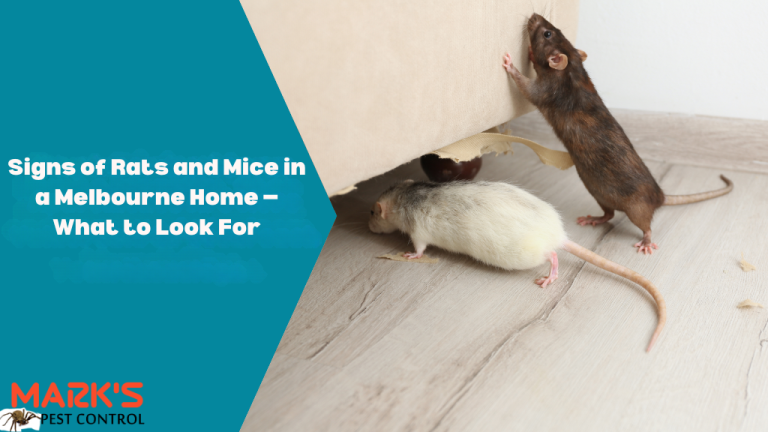
Signs of Rats and Mice in a Melbourne Home — What to Look For
Melbourne homeowners don't see a rat or a mouse before they see the evidence it left behind. A scratching noise in the ceiling at 2am, a chewed corner on a cereal box, a strange smell near the pantry — these small clues are usually the first real signs of rats Melbourne homes tend to show, […]
Read More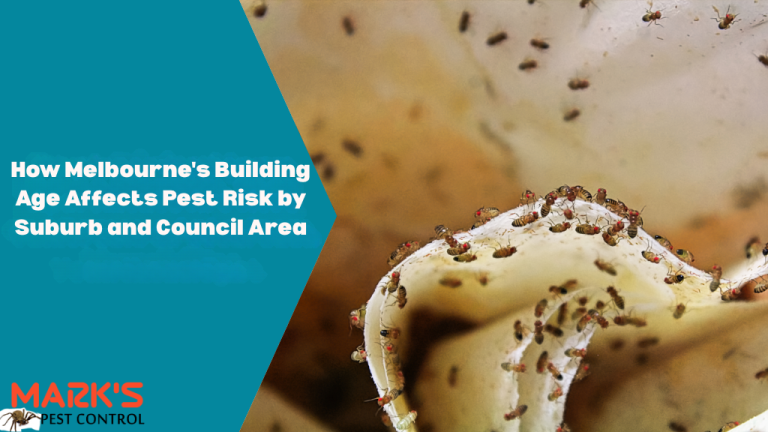
How Melbourne's Building Age Affects Pest Risk by Suburb and Council Area
Why Does Building Age Matter for Pest Control in Melbourne? Building age is one of the strongest predictors of pest risk in Melbourne residential properties. The era in which a home was constructed determines its structural materials, its subfloor configuration, the presence or absence of termite management, the state of its plumbing and drainage (key […]
Read More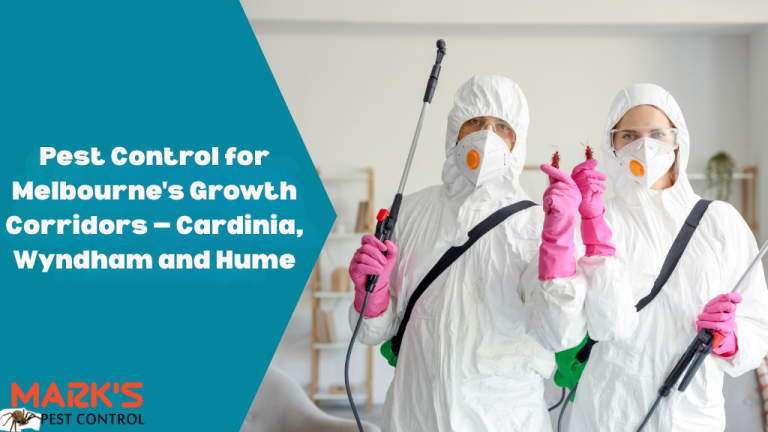
Pest Control for Melbourne's Growth Corridors — Cardinia, Wyndham and Hume
What Is the Growth Corridor Pest Challenge in Melbourne? Melbourne's outer growth corridors — the Cardinia Shire to the south-east, the City of Wyndham to the south-west, and the City of Hume to the north — share a common pest challenge: new housing developments built on former agricultural, grassland, or market garden land. When this […]
Read More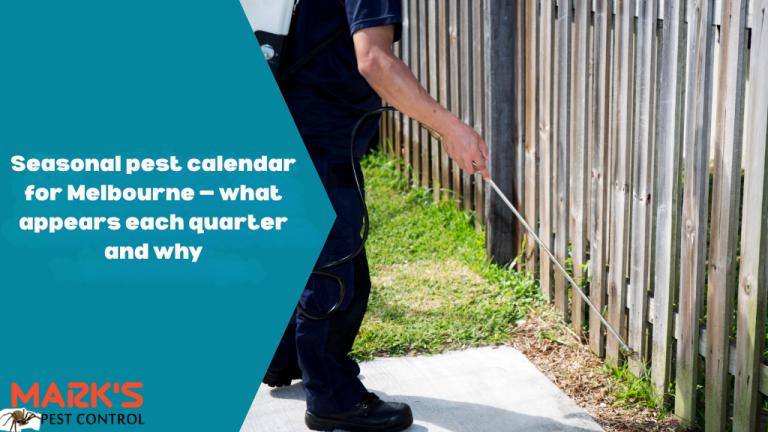
Seasonal pest calendar for Melbourne — what appears each quarter and why
Why Do Pest Problems Change With the Seasons in Melbourne? Melbourne's variable climate — four distinct seasons with notable temperature swings and irregular rainfall — drives clear seasonal cycles in pest behaviour. Understanding which pests areactive in each season, and why, allows Melbourne homeowners to take preventive action before pest populations peak rather than responding […]
Read More
City of Greater Geelong Pest Guide — Coastal, Rural and New Estate Patterns
What Are the Main Pest Pressures Across Greater Geelong? The City of Greater Geelong covers one of Victoria'sgeographically diverse council areas — from the made happen urban core around central Geelong and Newtown, to coastal suburbs on the Bellarine Peninsula, to fast-growing new estates in Armstrong Creek, Charlemont, and Corio, to rural-residential land in Lara […]
Read More
City of Yarra Pest Pressure — Victorian Terraces, Apartments and Heritage Stock
What Makes the City of Yarra a Pest Pressure Council Area? The City of Yarra covers Richmond, Fitzroy, Collingwood, Abbotsford, Clifton Hill, Northcote, North Fitzroy, and Carlton North. The council has Melbourne's highest concentration of Victorian-era terrace housing and one of the highest inner-city residential densities in Victoria. Both of these characteristics drive pest pressure […]
Read More
City of Boroondara Pest Guide — Heritage Homes, Possum Corridors and Termites
Why Is the City of Boroondara a Distinct Pest Control Area? The City of Boroondara covers Hawthorn, Camberwell, Kew, Balwyn, Ashburton, Canterbury, Glen Iris, Deepdene, Surrey Hills, and Box Hill South. It is one of Melbourne'sdensely-treed councils and has the highest concentration of Victorian and Edwardian heritage residential stock in the metropolitan area. These two […]
Read More
City of Monash Pest Control — Apartments, Student Housing and Terrace Homes
What Is the Pest Profile of the City of Monash? The City of Monash is one of Melbourne's eastern middle-ring councils, covering suburbs such as Clayton, Clayton South, Notting Hill, Huntingdale, Oakleigh, Oakleigh East, Glen Waverley, Mount Waverley, Chadstone, Hughesdale, and Mulgrave. The council area has a notably diverse residential mix — from the density […]
Read More